Position Cycles at Licensed Cardrooms: Their Effects on Blackjack Insurance Thresholds and Poker Equity in Sequential Play
Written by Nils Becker · Oct 21, 2026

Position Cycles at Licensed Cardrooms: Their Effects on Blackjack Insurance Thresholds and Poker Equity in Sequential Play
Position cycles emerge when dealers rotate seats and players shift spots during extended sessions at licensed cardrooms, and these movements alter the timing of decisions in both blackjack insurance scenarios and poker equity calculations across multiple hands. Data from regulatory oversight shows that such rotations change the order in which participants receive cards, which in turn modifies the statistical context for threshold choices like insurance bets when the dealer shows an ace.
How Rotations Influence Blackjack Insurance Thresholds
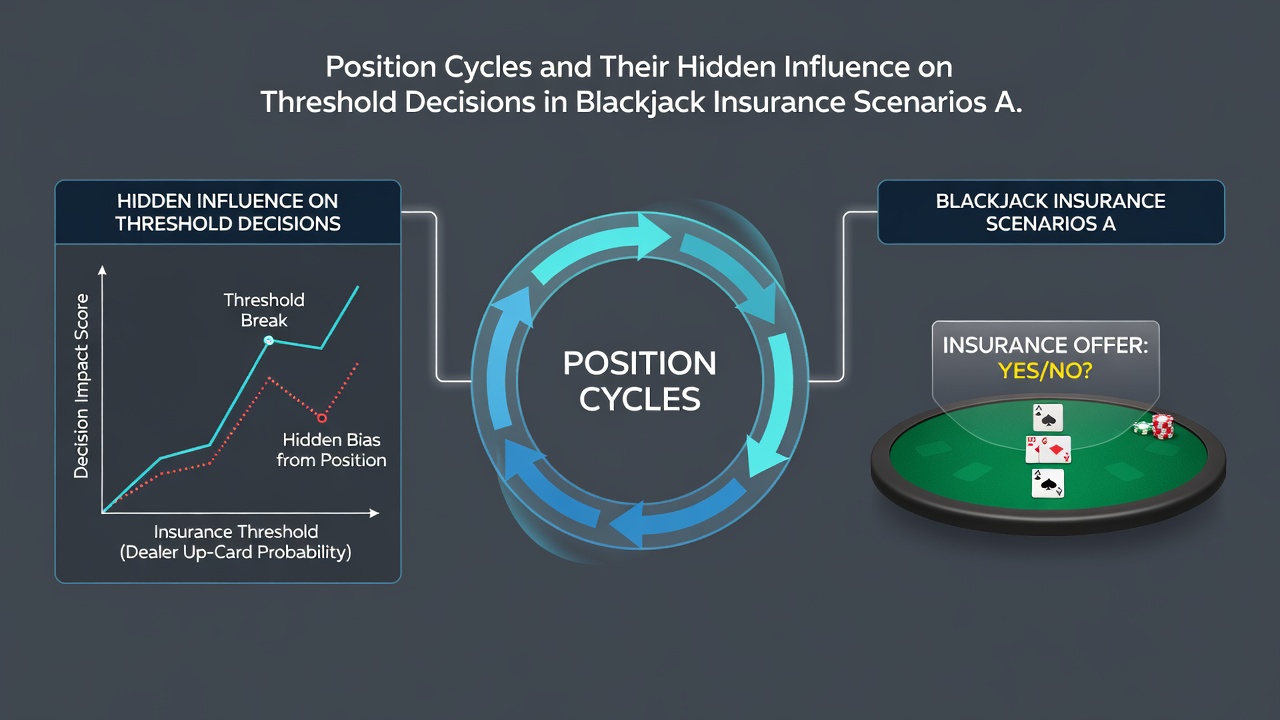
Insurance decisions in blackjack hinge on the correlation between the remaining deck composition and the probability that the dealer holds a ten-value card, yet position cycles introduce additional variables because the player who acts immediately before or after the dealer spot gains different informational edges. Studies from the University of Nevada, Reno indicate that players positioned later in the cycle often face insurance opportunities with slightly shifted remaining card distributions, since earlier hands have already removed specific values from play. Research indicates these shifts become measurable after three or more hands in a rotation sequence, particularly in multi-deck shoes common at regulated venues.
Thresholds for taking insurance therefore recalibrate based on the exact seat occupied during each cycle, and observers note that cardrooms in western states track these patterns through surveillance logs to maintain game integrity. When a player moves from early position to late position within the same shoe, the effective count for insurance purposes can change by fractions of a percent, enough to push borderline decisions across the break-even line according to probability models used by gaming analysts.
Poker Equity Adjustments During Multi-Hand Sequences
In poker variants dealt at the same facilities, position cycles force equity recalibrations because the button and blind positions advance with each hand, directly affecting pot odds and implied odds calculations over consecutive rounds. Players who track these movements adjust their range constructions and bluff frequencies as their relative position improves or worsens, and figures from industry reports reveal measurable differences in aggression rates tied to position advancement. Equity software outputs demonstrate that a player moving from under-the-gun to cutoff within a four-hand cycle experiences an average equity boost of several percentage points in common starting-hand scenarios, provided opponents remain consistent.
Multi-hand sequences amplify these effects because accumulated information from prior hands interacts with the new positional advantage, and researchers have documented cases where equity estimates diverge from static pre-flop models once rotation history enters the equation. Licensed cardrooms in multiple jurisdictions require periodic position resets during tournaments, and this practice creates predictable windows where equity adjustments accelerate.
Shared Statistical Models Across Both Games
Analysts have developed overlapping statistical frameworks that connect blackjack deviation indexes with poker position-based equity shifts, because both rely on accurate accounting of unseen cards and remaining deck penetration. According to data compiled by the Nevada Gaming Control Board, facilities that monitor penetration rates observe parallel patterns in how position cycles correlate with insurance correlation coefficients and flush-draw equity percentages in seven-card stud variants. These models incorporate burn-card protocols and shuffle calibration effects, which further modulate the magnitude of positional influence over time.
Evidence suggests that players who maintain records of position history across game types achieve more precise threshold adherence in blackjack while simultaneously refining bet-sizing decisions in poker, and this cross-application appears in training materials circulated by gaming associations in several regions. One study revealed that incorporating rotation data into standard counting systems reduced variance in insurance outcomes by measurable margins during controlled simulations conducted at academic research centers.
Regulatory Context in October 2026
Regulatory updates scheduled for implementation in October 2026 across certain western cardroom jurisdictions include enhanced reporting on position tracking systems, and these changes aim to standardize how operators document cycle impacts on game outcomes. Government agencies in Canada have published parallel guidelines that emphasize similar data collection practices, providing comparative benchmarks for licensed facilities operating under different legal frameworks. Industry organizations continue to release updated probability tables that integrate positional variables, allowing participants to reference current figures when evaluating insurance thresholds or recalibrating equity assessments during extended play sequences.
Conclusion
Position cycles therefore function as an embedded variable that reshapes both blackjack insurance thresholds and poker equity recalibrations throughout multi-hand sequences at licensed cardrooms, and quantitative models continue to evolve as operators and researchers collect additional rotation-specific data. The interplay between seat advancement and decision timing remains a consistent factor across game types, supported by ongoing statistical analysis from multiple regulatory and academic sources.