Pace Dynamics in Gaming: How Action Speed Shapes Accuracy in Blackjack Choices and Bluff Identification Across Busy Cardrooms
Written by Nils Müller · Nov 4, 2026

Pace Dynamics in Gaming: How Action Speed Shapes Accuracy in Blackjack Choices and Bluff Identification Across Busy Cardrooms
High-volume cardrooms operate under tight schedules where rounds complete quickly, and observers note that this accelerated rhythm directly influences how players handle decisions at the tables. Research from casino performance studies shows that when hands move at rates exceeding 60 per hour in blackjack, deviation from basic strategy increases by measurable margins, particularly in multi-deck setups common in major venues. Data collected across Western U.S. facilities indicates that split-second timing pressures lead to more frequent miscalculations on insurance bets and doubling opportunities, while the same conditions affect poker participants who must assess opponent tendencies under compressed intervals.
Measuring Velocity in Live Gaming Environments
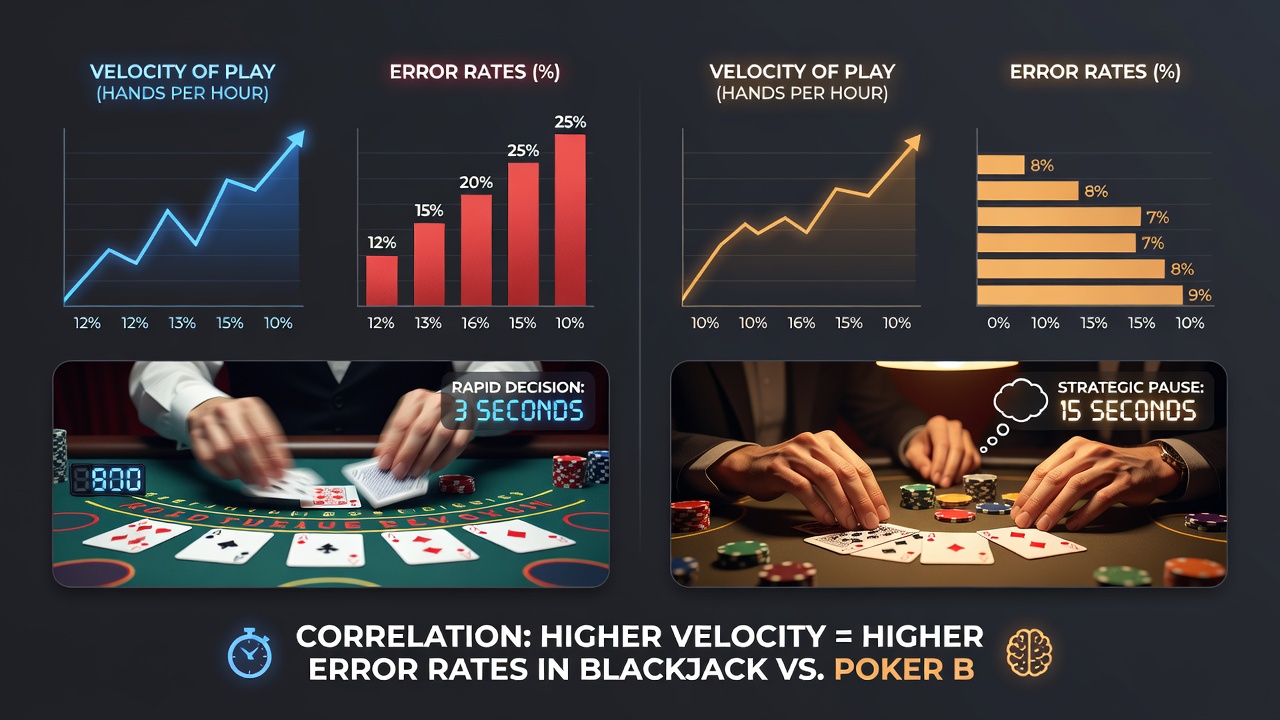
Velocity of play refers to the number of decisions completed within a given timeframe, and analysts track this metric through electronic systems installed at licensed properties. Figures from Nevada Gaming Control Board summaries reveal average blackjack speeds ranging from 45 to 75 hands hourly depending on table occupancy and dealer efficiency, whereas poker rooms often sustain 25 to 40 hands per hour in high-stakes areas. These rates rise further during peak periods, creating environments where players face repeated choices without extended reflection periods. Studies conducted at university research centers in Australia have documented how such pacing correlates with elevated error frequencies, especially when participants juggle multiple tables simultaneously.
Blackjack Decision Patterns Under Time Constraints
Blackjack players encounter basic strategy matrices that demand precise responses to upcard combinations, yet faster play cycles compress the window for accurate recall. Evidence from observational data gathered in California cardrooms demonstrates that error rates climb when rounds accelerate, with common deviations appearing in soft hand plays and surrender options. One analysis of session logs found that participants who experienced 70-plus hands per hour recorded 12 to 18 percent more departures from optimal charts compared to slower sessions. Researchers attribute this pattern to reduced cognitive processing time, which compounds across extended visits and alters overall expected value calculations in measurable ways.
Dealers in these settings maintain consistent rhythms through standardized procedures, and data shows that penetration levels interact with velocity to influence outcomes. When shufflers operate at calibrated speeds, the resulting flow leaves less margin for players to adjust counts or review prior results, leading to documented shifts in betting patterns. Those monitoring live play note that such dynamics appear consistently across properties that host both blackjack variants and side games.
Poker Bluff Detection in Accelerated Settings
Poker bluff detection relies on timing tells, bet sizing consistency, and physical cues, all of which become harder to isolate when action moves rapidly through multiple streets. Industry reports compiled by Canadian gaming associations indicate that in rooms averaging over 30 hands hourly, participants register fewer accurate reads on continuation bets and river aggression. This occurs because shorter intervals between decisions limit opportunities to observe baseline behaviors across orbits, reducing the sample size available for pattern recognition. Quantitative models developed in academic settings further link these conditions to changes in fold frequencies, as players allocate attention across more simultaneous variables.
High-volume environments amplify these effects through increased ambient noise and table density, factors that studies associate with diminished focus during critical spots. Observers have recorded instances where rapid preflop action leads to missed opportunities for isolating weaker ranges, while postflop streets compress the window for evaluating river decisions. Data from European regulatory summaries shows similar trends in mixed-game formats, where velocity adjustments produce parallel shifts in perceived hand strength evaluations.
Shared Statistical Models Across Game Types
Both blackjack and poker share underlying probability frameworks that respond to pace variations, and researchers have applied overlapping models to quantify these interactions. Deck composition changes, for example, influence blackjack deviation indexes at higher speeds while simultaneously affecting equity calculations for drawing hands in poker variants. Figures released ahead of November 2026 regulatory reviews highlight how facilities tracking combined metrics report consistent correlations between play velocity and accuracy metrics across table games. These models incorporate variables such as position cycles and burn protocols, revealing that adjustments in one area produce ripple effects in the other.
Cardroom operators implement monitoring tools to capture these overlaps, and results indicate that training programs focused on pace adaptation yield measurable reductions in error clusters. Participants who review session data under simulated high-velocity conditions demonstrate improved adherence to strategic thresholds, according to aggregated findings from multiple jurisdictions.
Regulatory Context and Operational Adjustments
Regulatory bodies in various regions continue to evaluate how operational speeds intersect with player protection standards, and upcoming reviews scheduled for late 2026 will incorporate velocity-related performance indicators. Properties respond by calibrating dealer rotations and table minimums to balance throughput with decision quality, using data that connects faster cycles to specific outcome variances. Such measures align with broader efforts to maintain integrity across blackjack-style games and community card formats.
Conclusion
Velocity of play establishes measurable connections to error rates in blackjack decision sequences and bluff assessment accuracy in poker, as documented through operational data and cross-game analyses. Facilities that track these variables provide evidence of consistent patterns that inform both player preparation and venue management practices. Ongoing research continues to refine the models used to understand these relationships within regulated cardroom settings.