Essential Guidelines for Blackjack and Poker Gameplay in Casinos Worldwide
Written by Nils Becker · Nov 18, 2026

Essential Guidelines for Blackjack and Poker Gameplay in Casinos Worldwide
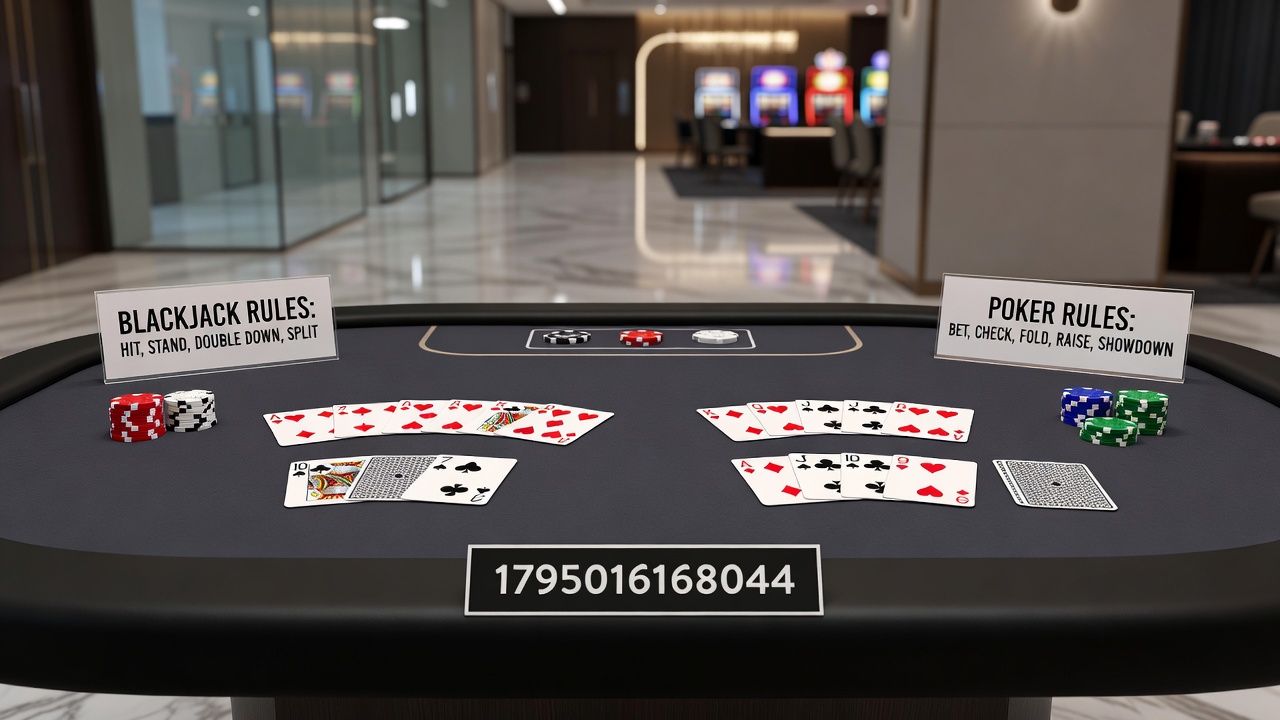
Blackjack centers on achieving a hand total closer to 21 than the dealer without exceeding that number, while poker relies on forming the highest-ranking five-card combination from dealt cards and community elements in variants like Texas Hold'em. Both games operate under standardized protocols enforced by casino operators and oversight agencies, with rules that dictate card values, player actions, and payout structures across global venues.
Blackjack Core Mechanics and Player Options
Standard blackjack uses one to eight decks shuffled together, where numbered cards retain their face value, face cards count as 10, and aces serve as either 1 or 11 at the player's discretion. The dealer distributes two cards to each participant and reveals one of their own, after which players decide on actions including hitting for an additional card, standing to hold the current total, doubling the wager for one more card, or splitting paired cards into separate hands. Insurance bets become available when the dealer shows an ace, allowing protection against a potential blackjack at a 2-to-1 payout ratio when the dealer holds 21.
Dealers must follow fixed procedures such as hitting on totals of 16 or less and standing on 17 or higher, although some establishments apply variations like hitting soft 17s that include an ace. Payouts typically award 3-to-2 for player blackjacks, even money for insurance wins, and 1-to-1 for standard victories, with pushes returning bets when totals match. Research from regulatory bodies shows these mechanics maintain house edges between 0.5 and 2 percent depending on specific rules and player adherence to basic strategy charts.
Poker Hand Rankings and Betting Structures
Poker hand rankings establish clear hierarchies from royal flush as the pinnacle down through straight flushes, four of a kind, full houses, flushes, straights, three of a kind, two pairs, one pair, and high card as the baseline. In Texas Hold'em, each player receives two hole cards while five community cards appear in stages across four betting rounds: pre-flop, flop, turn, and river. Participants form their best five-card hand using any combination of hole and community cards, with betting actions encompassing checks, bets, calls, raises, and folds determining who advances to showdown.
Pot odds calculations guide decisions by comparing potential winnings against the cost of a call, while position relative to the dealer button influences information advantage during later betting streets. Data from industry reports indicate that seven-card stud and Omaha variants introduce additional card distributions that alter probability assessments, yet core ranking systems remain consistent across formats regulated in North American and European jurisdictions.
Shared Elements and Regulatory Context
Both games incorporate random shuffle protocols and burn card procedures to mitigate predictability, with multi-deck configurations common in blackjack contrasting single-deck poker tables in some settings. Observers note that minimum bet thresholds and maximum wager limits shape participation patterns, particularly in high-volume cardrooms where November 2026 regulatory updates from the Nevada Gaming Control Board have refined disclosure requirements for game variants without altering fundamental scoring.
Canadian provincial gaming authorities provide parallel oversight through standardized testing of shuffling equipment and dealer training programs, ensuring consistent application of rules that prevent advantage play through mechanical means. Figures reveal that penetration rates in blackjack shoes and community card reveal frequencies in poker directly affect long-term outcome distributions, prompting venues to calibrate equipment according to audited standards.
Strategic Adjustments Based on Established Rules
Basic strategy tables for blackjack list optimal actions derived from combinatorial analysis of remaining cards, incorporating factors like dealer upcard and player total to minimize expected losses. Poker participants evaluate equity through hand strength assessments that account for outs, implied odds, and opponent tendencies within fixed betting structures. Those who've studied these systems recognize how deck composition patterns influence insurance decisions in blackjack alongside flush draw probabilities in stud variants, though execution remains governed by venue-specific guidelines.
According to reports from the Australian Casino Association, table minimum adjustments in competitive environments encourage players to refine bet sizing and hand selection criteria while preserving the integrity of core rules. External links to authoritative sources such as the Nevada Gaming Control Board detail compliance frameworks, and the Responsible Gambling Council of Canada supplies data on player behavior metrics tied to rule adherence.
Conclusion
Rules governing blackjack totals and poker rankings create distinct yet interconnected frameworks that define play across regulated facilities, with consistent card valuations, action sequences, and payout mechanisms upheld through oversight and equipment standards. As venues adapt protocols through 2026 and beyond, these foundational elements continue to structure participant decisions and game outcomes in measurable ways.